
I Had an Emergency C-Section at a Korean University Hospital. Here’s What I Wish I’d Known.
Nobody warns you about the gap between the birth you plan and the birth you get.
I had a plan. A birth plan, even. And then I had an emergency C-section at a university hospital, a baby in the NICU, and a week of learning what it actually feels like when everything goes differently than you imagined.
If you’re pregnant in Korea — or thinking about it — here’s what I know now that I didn’t know then.
How Korea’s Hospital System Works
Korea divides medical care into three tiers, and understanding this before you’re nine months along will save you real confusion.
First tier — local clinics (의원) are your starting point. When you first suspect you’re pregnant, you go to a neighborhood OB/GYN to confirm and get your early ultrasounds. Straightforward, close to home, no referral needed.
Second tier — hospitals and general hospitals (병원/종합병원) are where most pregnancies continue. Once things are established, many mothers move to a second-tier women’s hospital (여성병원) — the kind with full delivery facilities and a postpartum care center attached.
Third tier — advanced general hospitals (상급종합병원) are the large university hospitals. These are for high-risk pregnancies: advanced maternal age, underlying conditions, fetal concerns. And you cannot simply walk in.
That last part matters more than it sounds. To be seen at a third-tier hospital, you need a referral letter (진료의뢰서 or 소견서) from a first or second-tier doctor. Without one, you’ll be turned away or lose your National Health Insurance benefits. Even with a referral, wait times can be long — book ahead.
My Pregnancy: Cheonghwa Women’s Hospital → Seoul St. Mary’s Hospital
I started at Cheonghwa Women’s Hospital, a well-regarded second-tier women’s hospital in Dongjak-gu. For a while, everything went as expected.
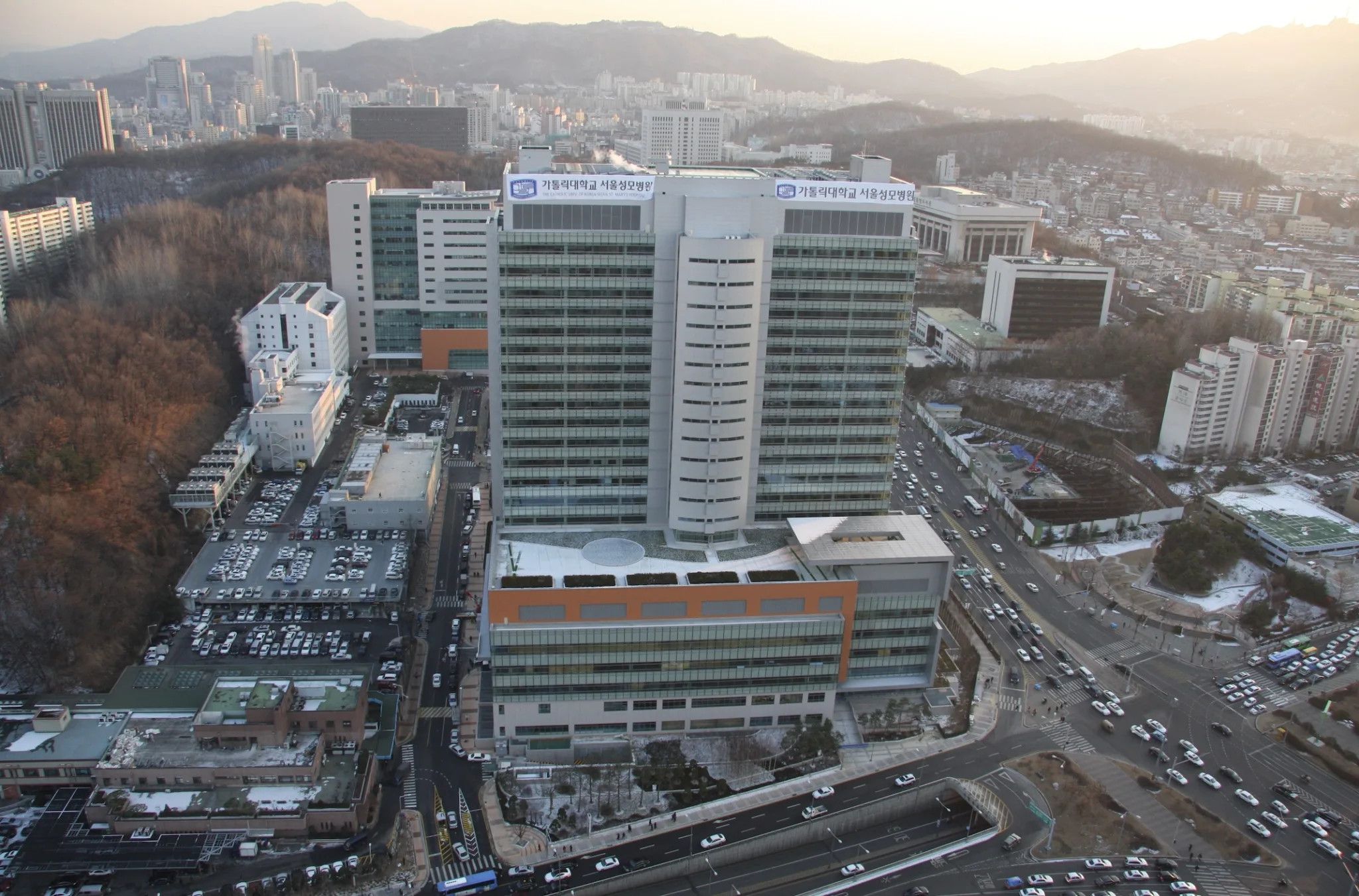
Then came the gestational diabetes diagnosis. And a uterine fibroid. My doctor issued a referral, and I transferred to Seoul St. Mary’s Hospital, one of Korea’s top university hospitals. The plan was still a vaginal birth.
I had an emergency C-section.
Childbirth does not care about your plans. Due to sudden complications, the surgery happened fast. And right after birth, my baby showed signs of respiratory distress and was admitted to the NICU for a week.
I want to be honest about what that was like: terrifying. The kind of fear that settles in your chest and stays there. I had prepared for so many things, and not for this.
What I’ll also say is that the medical team was extraordinary. In the middle of something I hadn’t prepared for, they were calm, clear, and present at every step. I don’t know what we would have done without them.
What Korean Delivery Culture Is Actually Like
A few things worth knowing before you’re in the room.
Korean delivery culture isn’t particularly partner-centered. In most standard delivery rooms, husbands are not present during active labor or delivery — they wait outside and meet the mother and baby only after everything is done. Some hospitals offer a family delivery room (가족분만실) as an option, but it’s not the default.
Water birth is available at specialized centers, though it’s not widely chosen.
What Korea does offer is meaningful autonomy around delivery method. If there are no medical contraindications, you can generally choose between vaginal birth and C-section based on your preference.
What Delivery Actually Costs With Insurance
My C-section at a top-tier university hospital came to around 700,000–800,000 KRW for the procedure itself, excluding room fees. With National Health Insurance applied.
The NICU bill was a different story. My baby’s one-week stay had a pre-insurance total of 30,000,000 KRW — roughly $22,000 USD.
What we actually paid: around 200,000 KRW.
Korea has a medical cost reduction program for low birth weight and premature babies that covered almost everything. I’ll write a full dedicated post on how to apply for that subsidy — because if your baby qualifies, this is something you need to know about.
What I’d Tell Someone Just Starting Out
Start prenatal care early. If anything puts your pregnancy in higher-risk territory, ask your doctor directly whether a referral makes sense — don’t wait for them to bring it up. Keep your referral letter. Book tertiary hospital appointments well in advance.
And know that even when things don’t go to plan, the system here is built to catch you.
External Link Suggestions:
Korea National Health Insurance Service (NHIS)
Seoul St. Mary’s HospitalKorea Disease Control and Prevention Agency – National Health Screening
Did your birth go the way you planned? I’d love to hear your story in the comments.
Leave a Reply