
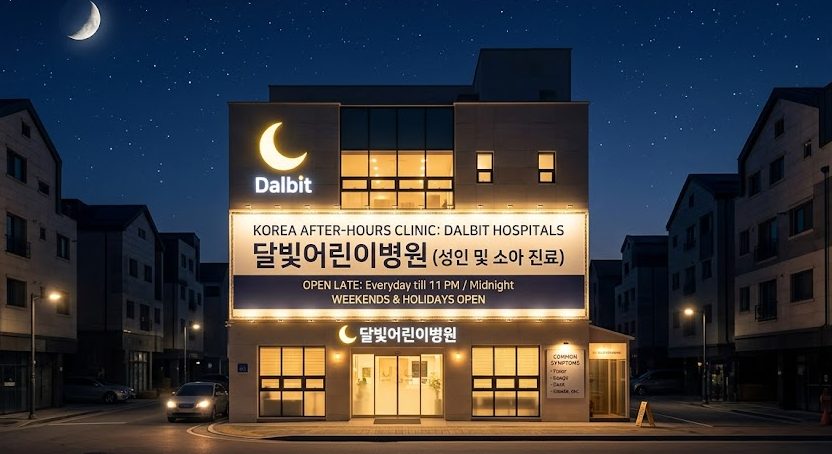
If you’ve ever Googled “where to go when sick at night in Korea” at 11pm with a feverish kid or a throbbing ear infection, this post is for you. Korea has a network of government-designated after-hours clinics called Dalbit Hospitals (달빛어린이병원) — and they are genuinely one of the best things about healthcare here that nobody talks about enough.
What Is a Dalbit Hospital in Korea?
Dalbit (달빛) means moonlight in Korean, and the name is pretty perfect: these are clinics that cover the hours between daytime and the dead of night — when you’re too sick to wait until morning but not sick enough for the emergency room.
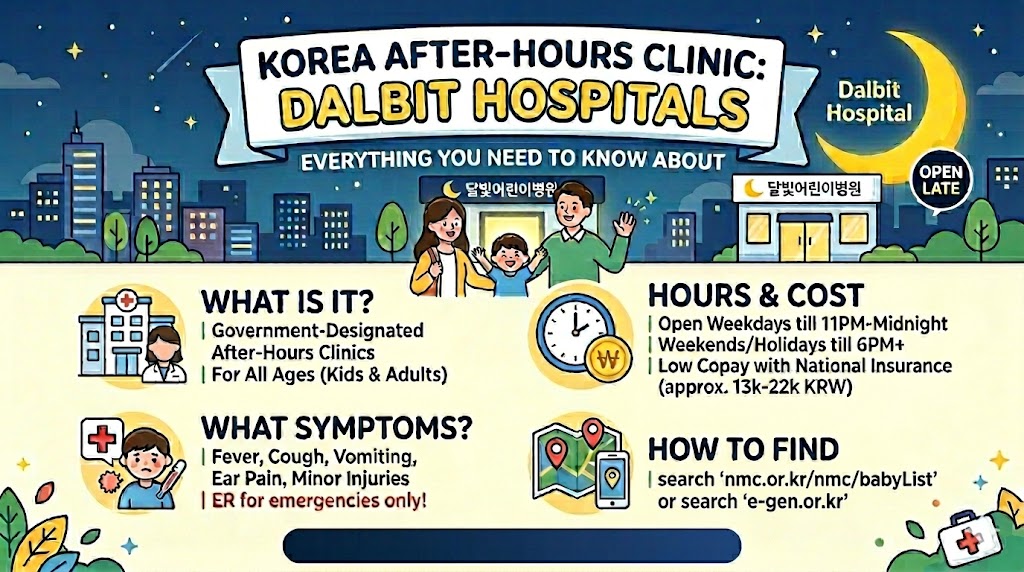
The program was launched by Korea’s Ministry of Health and Welfare in September 2014, starting with just a handful of locations. By late 2025, there are over 126 Dalbit clinics operating nationwide — nearly eight times more than in 2020. Despite the “children’s hospital” in the name, Dalbit clinics are open to patients of all ages — kids and adults alike.
Dalbit Hospital Hours in Korea
This is the part that surprises most people. Dalbit clinics are required to stay open:
- Weekdays: until at least 11pm–midnight
- Weekends & public holidays: until at least 6pm
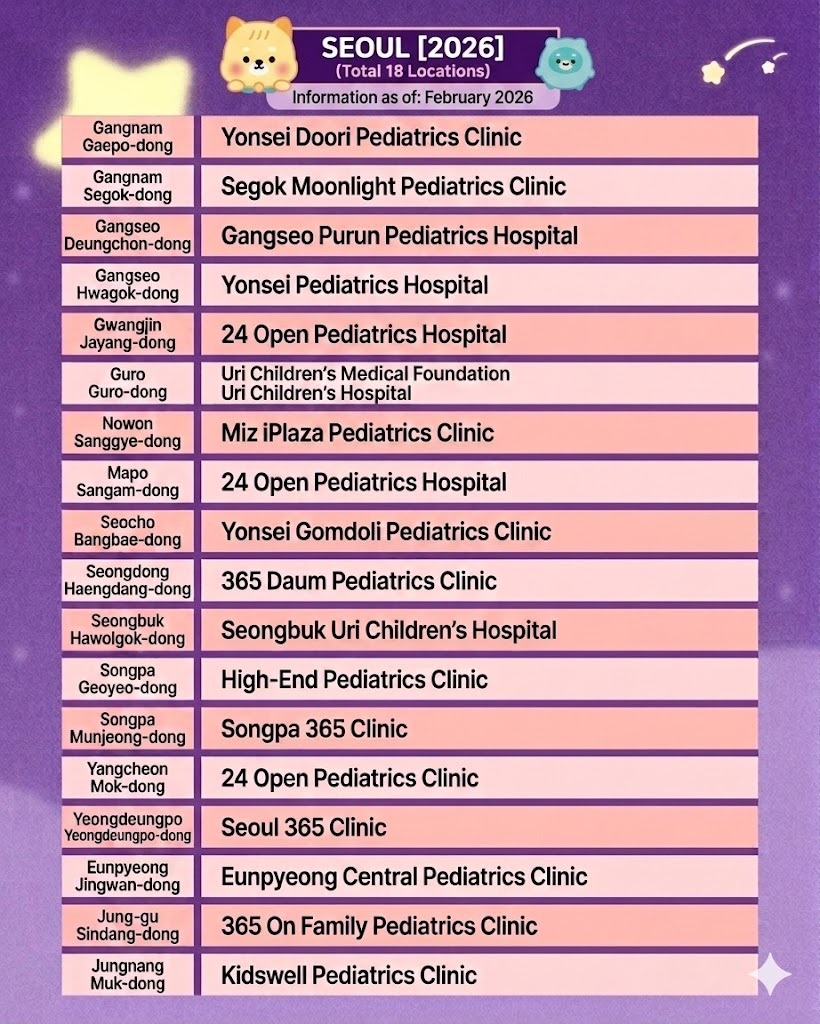
These are the minimum hours required to hold the Dalbit designation — some clinics go even later. Yonsei Gomdoli Pediatric Clinic in Seocho-gu, Seoul, for instance, stays open until midnight on weekends too. Hours vary by location, so always check before heading out.
How Much Does It Cost?
Dalbit clinics accept Korean national health insurance (건강보험), so you pay the standard copay — roughly similar to a regular daytime clinic visit. There’s a small after-hours surcharge added on:
- Clinic fee: approximately 13,000–22,000 KRW
- Partnered pharmacy fee: approximately 4,000 KRW
Compare that to an ER visit — which comes with a much higher bill and, more painfully, a multi-hour wait — and the difference is significant. For expats with travel insurance, most policies cover Dalbit visits the same way they’d cover any outpatient clinic.
What Symptoms Can You Go For?
Dalbit clinics are designed for mild to moderate symptoms — the gray zone between “I’ll sleep it off” and “we need to go to the ER right now.” Good reasons to visit include:
- Sudden or high fever
- Persistent cough or cold symptoms
- Vomiting or diarrhea
- Ear pain
- Skin rashes or hives
- Minor injuries
Go to the ER instead if: the patient is unconscious, having a seizure, having difficulty breathing, or showing signs of a serious allergic reaction.
How to Find a Dalbit Hospital Near You in Korea
The official search tool is E-Gen (응급의료포털), operated by Korea’s National Emergency Medical Center:
Search by region, check exact opening hours, and find partnered late-night pharmacies nearby. You can also search “달빛어린이병원” on Naver Maps or Kakao Maps, but E-Gen is the most up-to-date source — especially useful around public holidays when hours change.
Pro tip: Save your nearest Dalbit clinic in your phone contacts before you need it. You’ll thank yourself later.
Tips for Visiting a Dalbit Clinic in Korea
Call ahead. Clinics can have unscheduled closures or temporary suspensions. A 30-second phone call saves a wasted trip.
Check the partnered pharmacy. Your prescription is only useful if there’s a pharmacy open to fill it. E-Gen lists partnered late-night pharmacies alongside each clinic.
Use Aiansimtok (아이안심톡) if you’re unsure. This is a free 24-hour online consultation service staffed by real emergency medicine doctors. If you’re not sure whether to go in at all, start here — they’ll advise whether a clinic visit, ER, or just monitoring at home is the right call. Available at icaretok.nemc.or.kr (Korean language).
Frequently Asked Questions
Can foreigners use Dalbit clinics in Korea?
Yes. If you have Korean national health insurance (which most expats on long-term visas are enrolled in), you pay the standard copay. Without insurance, you pay the full out-of-pocket rate — still typically much less than an ER visit.
Is Dalbit only for children?
No — despite the name, Dalbit clinics are open to patients of all ages.
Do Dalbit clinics have English-speaking staff?
Not guaranteed, but some clinics in expat-heavy areas (Itaewon, Yongsan, Gangnam) may have English-speaking staff. Calling ahead to check is a good idea.
Are Dalbit clinics open on Korean public holidays?
Yes — holidays are specifically when they’re most useful. Check E-Gen for individual clinic hours around major holidays like Chuseok and Seollal, as some may have adjusted schedules.
What’s the difference between a Dalbit clinic and a 24-hour clinic in Korea?
Both offer after-hours care, but Dalbit clinics are government-designated and subsidized, meaning they meet specific standards and are officially tracked. 24-hour clinics operate independently.
Getting sick in an unfamiliar place is stressful enough without having to figure out where to go at midnight. Dalbit hospitals exist exactly for that moment — and now you know where to find one. 🌙
For the most current list of Dalbit clinics, visit e-gen.or.kr/moonlight.
Leave a Reply