
The Korea Parenting Resource Nobody Told Me About
Somewhere around my daughter’s first birthday, I did the math on toys.
The wooden stacking rings she played with for three weeks. The activity center that was fascinating for exactly one month before she learned to walk and never looked at it again. The shape sorter she figured out in a single afternoon and then lost interest in entirely. Every single one of these was purchased, arrived in packaging, lived in our apartment for a season, and then had to be dealt with.
It’s not a criticism of any toy specifically. It’s just that small children develop fast, and toys have a shorter useful life than almost anyone admits when they’re buying them.
Which is why I wish someone had told me earlier about 장난감도서관 — Korea’s toy library system.
What a Toy Library Actually Is
Exactly what it sounds like: a library, but for toys. You become a member, you borrow toys for a set period, you return them, you borrow something else.
Toy libraries in Korea are operated by local governments, Childcare Support Centers (육아종합지원센터), public health centers, and welfare organizations. Most districts have at least one. Toys are cleaned and disinfected after every return, so hygiene is managed — this is a formal community service, not a swap table.
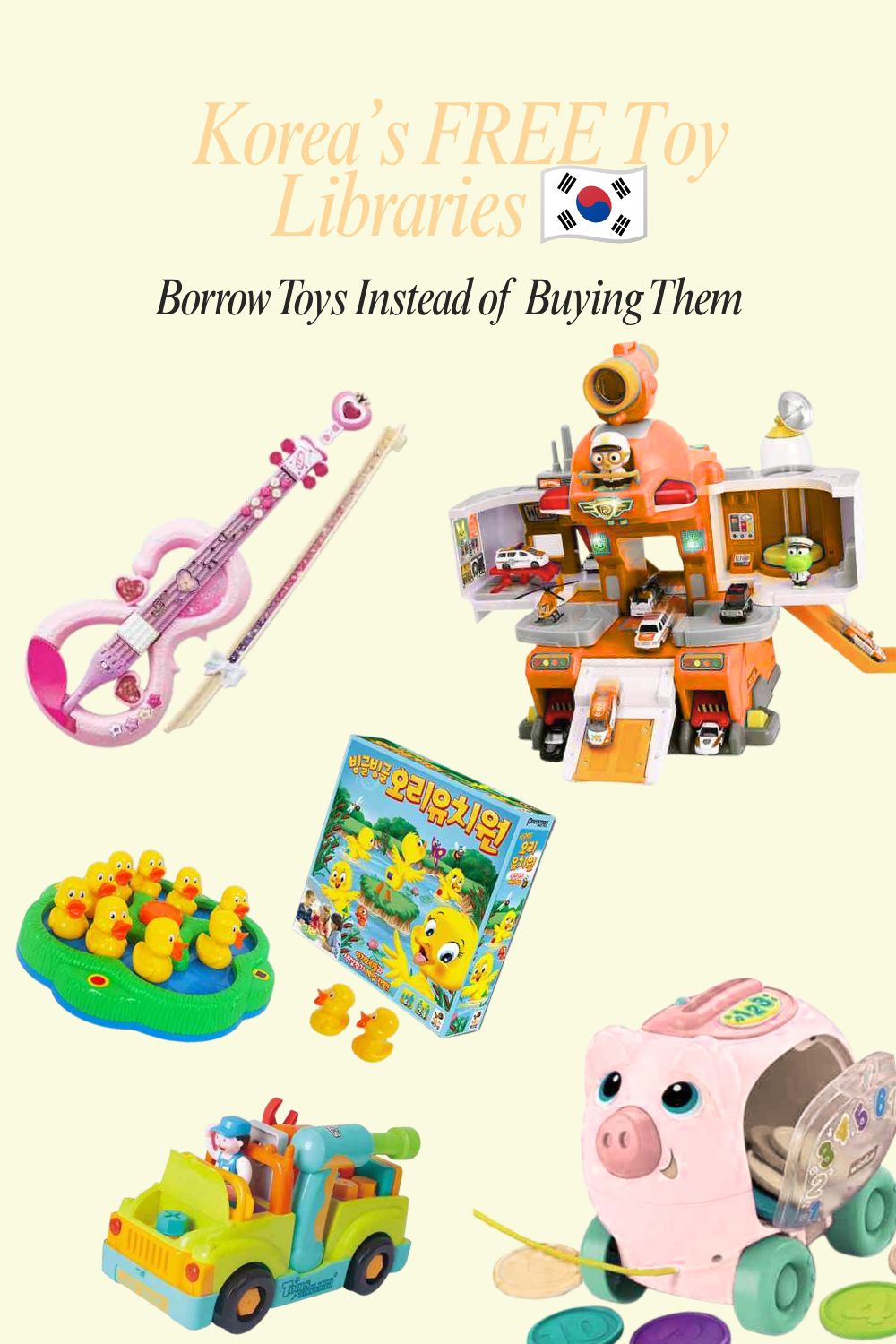
The selection varies by location but typically includes wooden educational toys, building blocks, ride-on cars, balance bikes, musical toys, pretend play sets, puzzles, baby gyms, indoor slides, push walkers, and baby jumpers. Some locations also lend larger baby equipment: high chairs, strollers, carriers, play mats.
The Part Most People Don’t Know: Play Rooms
Here’s what makes many Korean toy libraries more than just a borrowing service.
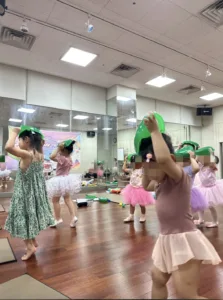
A number of toy libraries have a dedicated play room that families can book in advance — functioning essentially like a private kids’ café, free of charge, within the library itself. You reserve a time slot, bring your child, and have access to a fully equipped play space for the duration of your session.
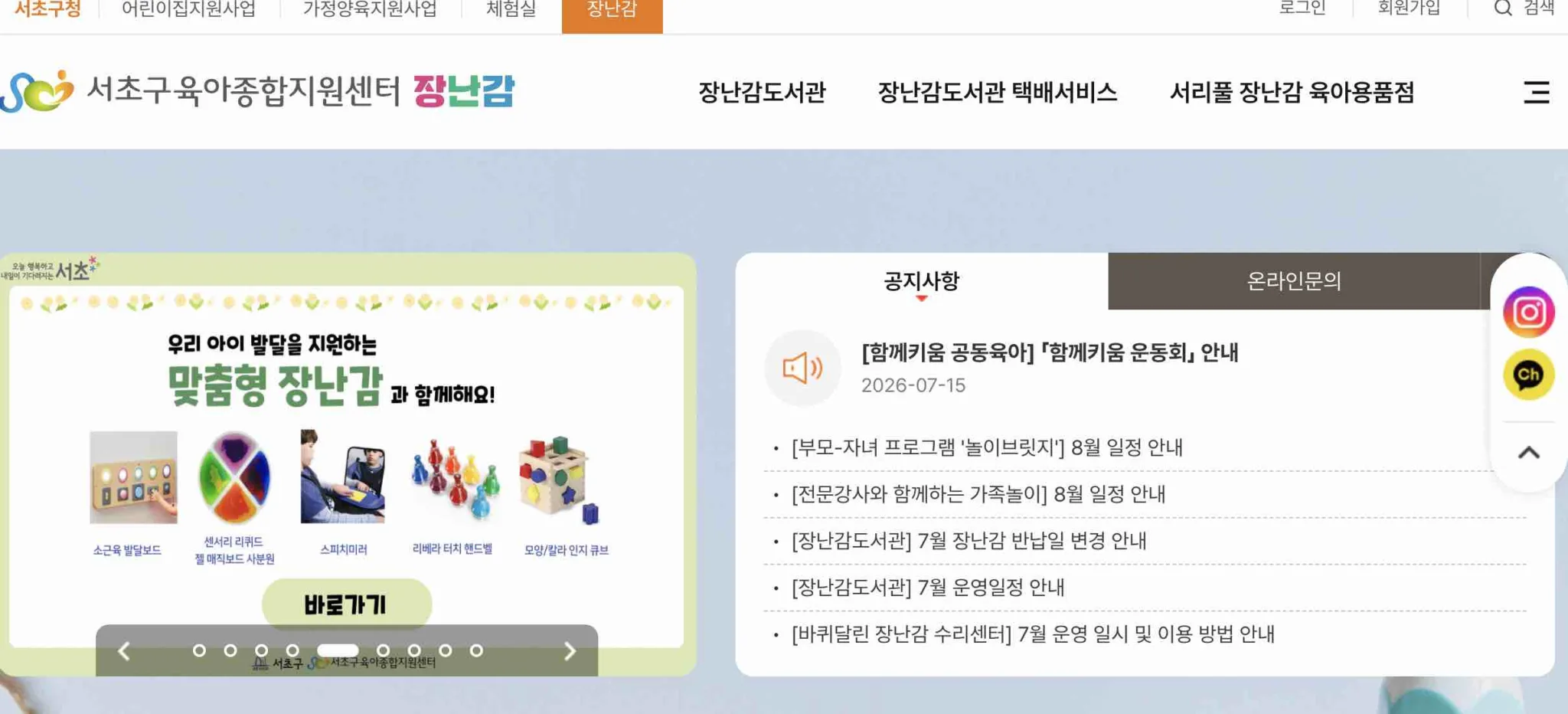
Seoripul Toy Library (서리풀 장난감도서관) in Seocho-gu is a good example of how this works in practice.
📍Adress: 148 Myeongdal-ro, Seocho-gu, Seoul
📞 Phone: 02-597-9340
🔗Play Room Reservation: https://www.scscc.or.kr/play/playroom/info3.asp
• Session 1: 10:30 AM – 12:00 PM
• Session 2: 1:30 PM – 3:00 PM
• Session 3: 3:30 PM – 5:00 PM
How to book: Online reservation required in advance. Walk-ins accepted only if same-day slots are available.
Rules worth knowing:
• Up to 5 families per session (maximum 16 people)
• If you arrive more than 30 minutes late, your reservation is automatically cancelled
• A caregiver must accompany children — children cannot enter alone
• Open to families with infants and toddlers registered in the district
Cost: Free.
A properly equipped play space, structured time slots so it doesn’t get overcrowded, no entry fee — this is the kind of thing that makes you wonder why it isn’t more widely known. Check whether your district’s toy library has a similar setup, because many do.
Who Can Use One
Most toy libraries serve families with children from infancy through preschool age.
Here’s the part expat families often don’t know: many districts allow foreign residents with a valid Alien Registration Card (ARC) to become members. Eligibility requirements vary by district — some require the parent or child to be registered as a resident of that specific district — so it’s worth checking the local requirements before your first visit. But the door is not closed to you simply because you’re not Korean.
What It Costs
Free to very cheap. Some districts offer free membership. Others charge a small annual fee. Some charge a small rental fee per toy. Families with multiple children often receive discounts.
The math here is uncomplicated: the toys you’d buy for a child who will outgrow them in six weeks versus borrowing them for free. Toy library membership is one of those services that pays for itself the first time you use it.
How to Find One Near You
Search Naver or Google using your district name plus 장난감도서관 — for example, 서초구 장난감도서관 or 마포구 장난감도서관. This will usually surface the relevant Childcare Support Center page with hours, membership information, and available inventory.
Visit your local Childcare Support Center (육아종합지원센터). Most toy libraries are either operated by or affiliated with these centers. The center page for your district will have everything you need — registration requirements, rental rules, online reservation options, opening hours.
Ask at your Community Service Center (주민센터). If online searching feels frustrating, walking in and asking is a completely reasonable alternative. Staff can direct you to the nearest toy library and tell you what you need to bring.
Reserve popular items online. Large indoor play equipment and ride-on toys book up quickly. If you have something specific in mind — an indoor slide, a balance bike, a particular type of activity center — check availability and reserve in advance rather than showing up and hoping.
Before Your First Visit
Bring your ARC card. Check whether proof of district residence is required. Inspect the toy before you leave the library — noting any existing damage is worth doing. Return on time to avoid late fees. Most locations limit the number of toys you can borrow simultaneously, so come with a priority list rather than an open-ended wish list.
The Honest Case for Using One
Toy libraries don’t solve everything. They require some planning, the selection depends on your district, and popular items get reserved quickly. But they’re one of the most practical parenting resources Korea offers — genuinely useful, genuinely affordable, and genuinely underused by the expat families who would benefit most from knowing about them.
The next time your child outgrows something in three weeks, you’ll understand why they exist.
Did you know about toy libraries before reading this? And if you’ve used one, which district — I’d love to know what the selection was like.
Internal Link Suggestions:
External Link Suggestions:

Leave a Reply